July 19, 2026
How to Choose a Quality Fiber Cleaver for Your Fujikura 60S Fusion Splicer?
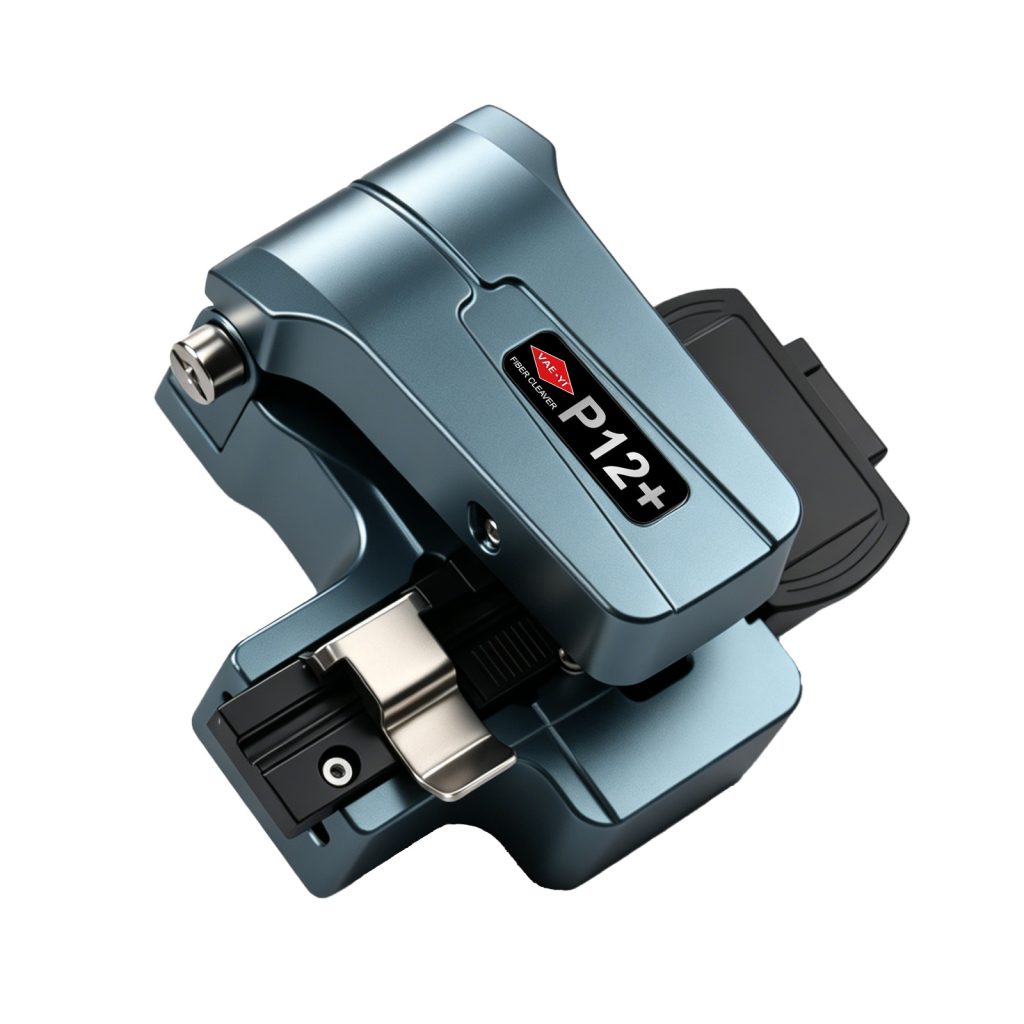
A fusion splicer can only perform as well as the fiber preparation that comes before it. If you use a Fujikura 60S fusion splicer, selecting a reliable fiber cleaver is one of the most important decisions for consistent splicing work.
For FTTH installation, telecom construction, repair work, and routine network maintenance, the cleaver must provide a clean end face, stable operation, and practical durability in the field. The VAEYI P12+ fiber cleaver is designed for this type of daily single-fiber workflow.
Why the cleaver matters before fusion splicing
Before a fiber enters the fusion splicer, it must be stripped, cleaned, and cleaved correctly. A poor cleave can lead to an uneven fiber end face, higher splice loss, failed splice attempts, or unnecessary rework.
A good cleaver should help technicians achieve:
- A consistent cleave angle
- A clean and repeatable fiber end face
- Reliable operation across many field jobs
- Easy blade maintenance
- Compatibility with the fiber types and cleave lengths used in the job
For a Fujikura 60S operator, the goal is not simply to buy the most expensive cleaver. The goal is to choose a mechanical cleaver that fits the actual fiber preparation workflow.
What to check when choosing a cleaver for a Fujikura 60S
1. Cleave quality and consistency
The first requirement is stable cleaving performance. The VAEYI P12+ is specified with an average cleave angle of 0.5°, helping technicians prepare fiber for standard fusion splicing applications.
In real field conditions, cleave quality also depends on correct stripping, careful cleaning, fiber positioning, blade condition, and regular maintenance. A quality cleaver supports good results, but disciplined preparation remains essential.
2. Fiber and job compatibility
The P12+ is designed for single-fiber work and supports common field preparation tasks involving bare fiber, drop cable, and patch cord applications. Its specified fiber cladding diameter range is 80–150 μm, which covers standard telecom fiber preparation requirements.
Before purchasing, always check the fiber type, coating structure, holder or clamp arrangement, and required cleave length for your own 60S workflow.
3. Cleave length
A cleaver must produce a cleave length that suits the splicer holder and the technician’s working method. The P12+ supports a cleave length of 10 mm or more, making it suitable for many standard field splicing procedures.
For a specific project, confirm the cleave-length requirement of your fiber holder, splice sleeve process, and operating procedure before ordering.
4. Blade life and maintenance cost
Blade life has a direct effect on long-term operating cost. The P12+ uses a 24-position blade design with a specified service life of up to 48,000 cleaves.
This allows the technician to rotate or adjust the blade position as needed rather than replacing the complete cleaver after limited use. For contractors and maintenance teams, this can help keep equipment cost predictable over time.
5. Field portability and durability
Field technicians need tools that are easy to carry but strong enough for daily use. The P12+ has a compact body, weighs approximately 230 g, and is designed with a CNC-machined structure.
Practical features include:
- 3-in-1 clamp design
- Dual adjustment capability
- Fiber scrap collector
- Safety lock
- Compact form for installation and maintenance work
These details matter when the cleaver is used repeatedly in cabinets, manholes, customer sites, construction areas, or mobile maintenance vehicles.
Is the VAEYI P12+ a suitable choice for a Fujikura 60S?
For standard single-fiber FTTH installation, fusion splicing, and telecom maintenance work, the VAEYI P12+ can be a practical quality cleaver to use alongside a Fujikura 60S.
It should be considered an independent mechanical fiber-preparation tool. It is not presented as a Fujikura-branded accessory or an electronic replacement for a cleaver with proprietary wireless communication or automatic blade-control functions.
However, if your priority is stable cleaving performance, long blade life, compact portability, and a sensible cost for everyday field work, the P12+ is a strong option to evaluate.
Final checklist before ordering
Before choosing a cleaver for your Fujikura 60S, confirm:
- Your fiber type and cladding diameter
- Required cleave length
- Single-fiber or ribbon-fiber application
- Clamp and holder workflow
- Expected daily splice volume
- Blade maintenance requirements
- Whether you need electronic integration or only a reliable standalone cleaver
For most standard single-fiber applications, a well-maintained P12+ can provide the consistent fiber preparation needed before fusion splicing.
Ready to equip your splicing team?
Explore the VAEYI P12+ Fiber Cleaver for specifications, product video, datasheet download, and online ordering.